
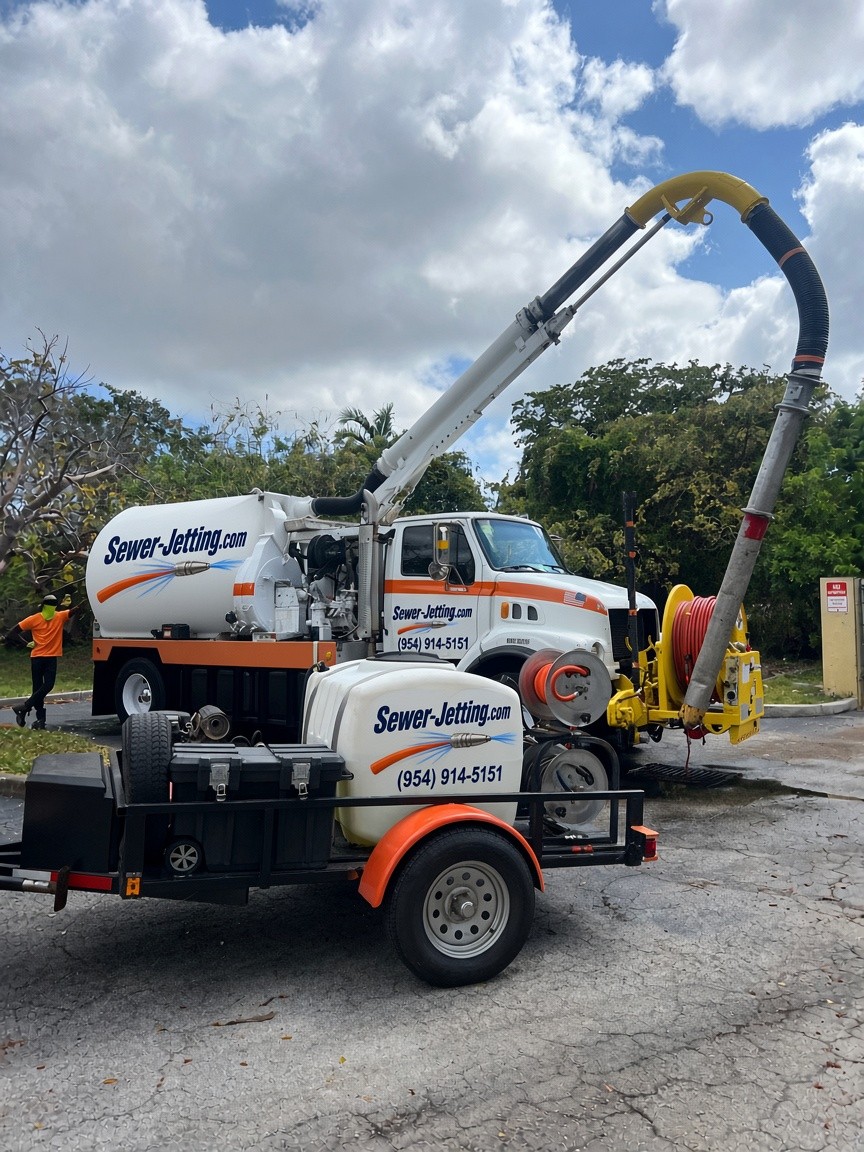
Storm drains
Storm drain cleaning in South Florida
Catch basins, parking lot drains, French drains, retention connections, culverts, and storm sewers cleaned of sand, sediment, and debris in Miami-Dade, Broward, and Palm Beach Counties.
A storm system is not a sanitary sewer
Storm drain cleaning is featured on this site for a reason. South Florida rain finds every undersized or silted inlet. Sewer-Jetting.com treats catch basins, parking-lot drains, French drains, retention-system piping, culverts, and storm sewers as a specialty: get the sand, sediment, and debris out so the structure can do the job it was designed for.
Vac-truck recovery is used when a basin or structure holds a volume of material that should be removed, not just pushed downstream. Hydro jetting flushes the connecting lines. Pressure washing may be used around pads and inlets. None of that changes a bad grade or a crushed pipe; we will tell you if cleaning has reached its limit.
Why storm drains fail in South Florida
South Florida's rainy season brings intense afternoon storms, and a storm system only handles them if every inlet and pipe is open. Sand blows and washes into grates, landscaping drops leaves and mulch, and parking lots shed trash and oily sediment. Over time that material settles in catch basins and connecting pipes until the system can no longer keep up, and water ponds on the pavement or backs toward buildings.
We have jetters for lines from 1 inch up to 36 inches and larger pipes. Storm lines, culverts, and connecting pipes on commercial and HOA sites are often large, so we bring jetters and vac trucks sized for the job.
Our storm drain cleaning process
Inspect
Open the structures, check the inlets and outlets, and use a camera on the pipes when they can be seen.
Remove
Use vac truck recovery to pull sand, sludge, and debris out of basins and pits.
Jet
Hydro jet the connecting lines and culverts so water can move through the system.
Report
Tell you what we found, including any broken or crushed pipe that cleaning cannot fix.
Who we clean storm drains for
- Shopping centers, plazas, and retail commercial properties
- HOAs, condo associations, and apartment communities
- Office parks, schools, hotels, and warehouses
- Municipal and industrial sites
- Homes with yard, driveway, and French drains
We clean storm drains across Fort Lauderdale, Pompano Beach, Weston, Coral Springs, Boca Raton, West Palm Beach, and the rest of our service area. Scheduling cleaning before the rainy season is the best way to avoid surprise flooding.
FAQ
Frequently asked questions
Can you clean storm drains and catch basins?
Yes. Storm-drain cleaning is a featured part of the work described on this site: catch basins, parking-lot drains, French drains, retention connections, culverts, and storm sewers. Sand, sediment, leaves, and debris are removed so water can move during South Florida rain. Vac-truck recovery may be used when the job requires it.
What is a catch basin and why does it clog?
A catch basin is a grated inlet that collects stormwater and lets sediment settle before water continues into a storm line. Leaves, sand, trash, and parking-lot grit fill the sump and can block the outlet. Cleaning the basin and the line downstream helps keep pavement, walks, and loading areas from ponding.
What is a French drain, and can it be cleaned?
A French drain is a buried drainage path — often perforated pipe in stone — that moves groundwater or yard runoff away from a structure. These lines silt up, grow roots, or collapse in sections. Cleaning and jetting can help when the pipe is intact and accessible; a camera or a site look is used to see whether the drain is still a pipe that can be cleaned.
Can parking lot drains be cleaned?
Yes. Parking-lot drains and the catch basins tied to them collect sand, trash, and oily sediment. Cleaning the inlet and jetting or flushing the outlet line is a regular part of commercial storm-drain work, especially before the rainy season or after a storm has left standing water.
Can jetting help after a heavy South Florida rain?
If catch basins, parking-lot drains, or storm lines are holding sand and debris, cleaning them helps the system take the next rain. Jetting will not fix a grading problem, an undersized drain, or a structural collapse, but it is often the right step when the pipe is simply loaded with sediment. That is a large part of our storm-drain work in Broward, Miami-Dade, and Palm Beach Counties.
What is the difference between a storm drain and a sanitary sewer?
A sanitary sewer carries wastewater from plumbing fixtures to the sewer or a septic system. A storm drain carries rain and surface runoff. They should not be mixed. Cleaning methods can look similar — jetting, vacuuming, camera work — but the systems, permits, and discharge rules can differ. We treat them as separate systems.
How often should parking-lot storm drains be cleaned?
It depends on how much sand, trash, and landscaping debris the site collects. Many properties schedule cleaning before the rainy season and check basins again after major storms.
Is a storm drain the same as a sewer?
No. Storm drains carry rainwater, usually to a canal, lake, or retention area. The sanitary sewer carries wastewater from inside the building. They are separate systems.
What size pipes can you jet?
We have jetters for lines from 1 inch up to 36 inches and larger pipes. That covers small kitchen and bathroom lines, main sewer lines, commercial grease lines, and large storm drains and culverts. We match the jetter, hose, and nozzle to the size and condition of the pipe.
Need Drain Cleaning Today?
We're Ready to Help!
(954) 914-5151All calls answered by the owner-operator.