FAQs
Frequently asked questions
Answers about hydro jetting, sewer jetting, storm drains, and drain cleaning in South Florida. Call (954) 914-5151 if your question is not listed.
FAQ
Hydro jetting, drains, and storm systems
What is hydro jetting?
Hydro jetting is a drain-cleaning method that sends high-pressure water through a hose and specialized nozzle to loosen and flush material inside a pipe. Unlike a cable that often bores a path through a blockage, jetting is used to scrub along the pipe wall and carry grease, sludge, scale, and debris out of the line when the pipe is in condition to take that pressure.
What is sewer jetting?
Sewer Jetting is another name for hydro jetting when the work is done in a sewer or main drain line. The tool is the same idea: pressurized water, a nozzle matched to the job, and a line that has been evaluated so the method fits the pipe. People searching for sewer jetting and hydro jetting are usually describing this full-diameter water cleaning.
How is hydro jetting different from snaking or cabling?
A drain snake or cable machine spins a cutting head or auger to break through a clog and restore some flow. That can be the right first step on many household blockages. Hydro jetting uses water to scour the circumference of the pipe so grease, sludge, and film are less likely to be left on the wall. The comparison table on this site walks through those differences in plain language.
Is hydro jetting safe for older pipes?
Not every pipe should be jetted at high pressure. Age, material, offsets, and existing damage all matter. The careful approach is to learn what you can about the line — including a camera inspection when the pipe is accessible and not completely holding water — and then choose pressure, nozzle, and method accordingly. If jetting is not the right tool, we will say so.
Do you inspect with a camera before jetting?
When the line is accessible and the camera can travel, a pre-job look helps confirm what is in the pipe and whether the wall can take pressurized water. After cleaning, a second look is often used so you can see whether the wall is actually clear. Standing water or limited access can delay or change that sequence; we explain those limits on site.
When should a homeowner consider hydro jetting?
Recurring clogs in the same line, greasy kitchen mains, slow drains in more than one fixture, and roots or scale visible on a camera are common reasons. A single hair clog in a bathroom sink may only need conventional drain cleaning. If a main keeps closing at the same point, jetting is worth discussing.
Can hydro jetting remove tree roots?
Jetting with the right nozzle can cut and flush root masses that have entered a line, and it can clean the debris those roots hold. It does not repair a cracked or separated pipe that let the roots in. Camera inspection is how we tell the difference and talk with you about what the line still needs after the roots are cleared.
What kinds of drain cleaning do you offer?
Drain cleaning covers sinks, showers, tubs, toilets, laundry lines, floor drains, roof drains, and main sewer lines. The method may be cable, jetting, or another mechanical approach depending on the blockage and the pipe. The goal is to restore flow and, when you want it, to show you what caused the stoppage.
Do you work on restaurant grease lines?
Yes. Commercial kitchen lines and grease-heavy drains are a core commercial use of hydro jetting. Water can liquefy and flush grease that a cable often only pierces. Many restaurants schedule this work as preventive maintenance so a line does not back up during service. Exact timing and frequency depend on the kitchen and the line, which we discuss with you rather than guess from a website.
Can you clean storm drains and catch basins?
Yes. Storm-drain cleaning is a featured part of the work described on this site: catch basins, parking-lot drains, French drains, retention connections, culverts, and storm sewers. Sand, sediment, leaves, and debris are removed so water can move during South Florida rain. Vac-truck recovery may be used when the job requires it.
What is a catch basin and why does it clog?
A catch basin is a grated inlet that collects stormwater and lets sediment settle before water continues into a storm line. Leaves, sand, trash, and parking-lot grit fill the sump and can block the outlet. Cleaning the basin and the line downstream helps keep pavement, walks, and loading areas from ponding.
What is a French drain, and can it be cleaned?
A French drain is a buried drainage path — often perforated pipe in stone — that moves groundwater or yard runoff away from a structure. These lines silt up, grow roots, or collapse in sections. Cleaning and jetting can help when the pipe is intact and accessible; a camera or a site look is used to see whether the drain is still a pipe that can be cleaned.
Do you serve HOAs and condominiums?
Yes. HOAs, condominium associations, and their property managers are part of the commercial and multi-family work we do. Shared mains, amenity-building drains, and parking-lot or courtyard storm drains are typical requests. Camera documentation can help a board or manager share what was found.
Do you offer commercial maintenance programs?
Yes. We can discuss scheduled hydro jetting and drain or grease-line cleaning for restaurants, plazas, apartments, and other properties that cannot afford a surprise backup. Program details — frequency, scope, and pricing — are set with you after we understand the property.
Which areas of South Florida do you serve?
Sewer-Jetting.com serves properties in Miami-Dade, Broward, and Palm Beach Counties. City pages are published for Fort Lauderdale, Oakland Park, Pompano Beach, Hollywood, Plantation, Davie, Sunrise, Weston, Coral Springs, Boca Raton, Boynton Beach, Delray Beach, and West Palm Beach. If your city is not listed yet, call and ask — other communities in those counties may still be in range.
How do I request a free estimate?
Call (954) 914-5151 or use the contact form. Tell us the city, whether the property is a home or a business, and what the line is doing. An estimate for the actual work is discussed after we understand access, the pipe, and the job.
What can hydro jetting remove from a pipe?
When the pipe can take it, jetting is used on grease, soap and sludge film, sanitary debris, sand and sediment, scale, roots, and some hardened deposits. It is not a repair method for a collapsed, badly offset, or broken pipe, and it will not replace a lining or pipe-replacement decision if the camera shows structural failure.
Will jetting fix a broken or collapsed pipe?
No. Jetting cleans. If a camera shows a break, a belly that holds water, a severe offset, or a collapse, cleaning may still help you diagnose the line, but it does not rebuild the pipe. We would rather show you that condition than pretend a cleaning is a structural repair.
What is pipe descaling?
Descaling is the removal of mineral scale or rust tuberculation that has narrowed a pipe, especially older cast iron. It may involve mechanical heads, flex-shaft style tooling, and/or jetting, depending on the line. The point is to restore interior diameter so waste can flow, then verify with a camera when possible.
What is a sewer camera inspection?
A sewer camera is a small waterproof camera on a flexible cable that is pushed through a drain or sewer line. The image shows buildup, roots, joints, cracks, and standing water. Locating equipment can often mark the path of the pipe on the ground. Inspections are useful before and after cleaning, for real-estate questions, and when a clog keeps coming back.
Do you work on both residential and commercial properties?
Yes. Homes, condos, restaurants, shopping centers, apartments, offices, schools, hotels, warehouses, and other commercial or industrial sites are all part of the work this site describes. Residential and commercial pages outline how those jobs typically differ, including grease lines and preventive programs for businesses.
Who owns Sewer-Jetting.com?
Sewer-Jetting.com is a family-owned South Florida hydro jetting and drain company serving Miami-Dade, Broward, and Palm Beach Counties.
What should I do if a drain is backing up right now?
Stop adding water if you can, keep people away from sewage, and call (954) 914-5151. Describe the property, which fixtures are affected, and whether sewage is overflowing. We will talk through timing and next steps.
Can parking lot drains be cleaned?
Yes. Parking-lot drains and the catch basins tied to them collect sand, trash, and oily sediment. Cleaning the inlet and jetting or flushing the outlet line is a regular part of commercial storm-drain work, especially before the rainy season or after a storm has left standing water.
Do you clean roof drains, laundry lines, and septic lines?
Those lines are part of the residential and commercial drain work we discuss. Roof drains can load with debris, laundry lines with lint and detergent residue, and septic inlet or outlet piping with sludge. Access and tank condition matter on septic work; we will tell you if a line is something we can clean or if another specialist is needed.
Is hydro jetting messy?
The work happens inside the pipe, from a cleanout, roof vent, or other access point when one is available. Water and debris are directed back through the line or recovered as the job requires. We work to protect the area around the access point. Every property is a little different, and we will explain the setup before starting.
What equipment do you use?
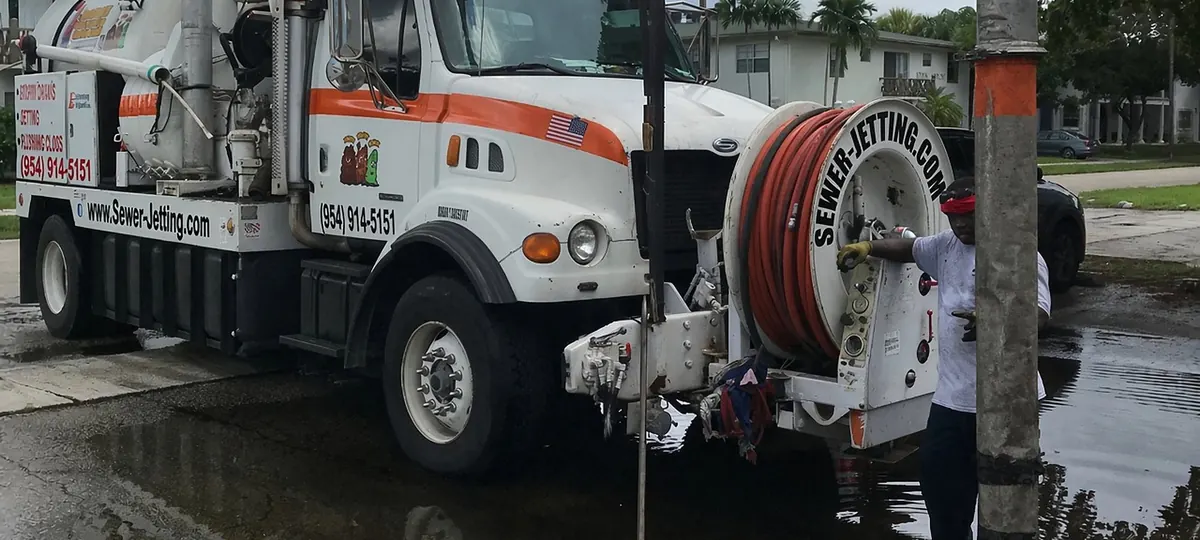
The equipment categories used for this work include trailer and high-flow jetters, sewer cameras and locators, cable machines, pressure washers, and vac-truck support for basins, pits, and debris recovery. Nozzle choices include root-cutting, penetrating, flushing, and descaling heads.
Do you work on municipal or industrial sites?
Municipal and industrial drain and storm work is listed among the industries we serve, along with restaurants, hotels, warehouses, and campuses. Scope, access, and site rules are reviewed for each property. Call with the location and a short description of the system so we can tell you whether it is a fit.
What is the difference between a storm drain and a sanitary sewer?
A sanitary sewer carries wastewater from plumbing fixtures to the sewer or a septic system. A storm drain carries rain and surface runoff. They should not be mixed. Cleaning methods can look similar — jetting, vacuuming, camera work — but the systems, permits, and discharge rules can differ. We treat them as separate systems.
Will you tell me if jetting is not the right method?
Yes. That is part of doing the job honestly. If a camera or a site condition shows a pipe that should not take high pressure, or a clog that is better served by another tool, we will say so and talk through options. Cleaning a line is only useful if it matches what the pipe can actually handle.
How should a property manager prepare for a visit?
Have a point of contact on site, note where cleanouts or basin lids are, and describe which tenants or buildings are affected. If invoices, certificates of insurance, or access badges are required, mention that when you call. We will plan the work around access and, when needed, around business hours.
Can jetting help after a heavy South Florida rain?
If catch basins, parking-lot drains, or storm lines are holding sand and debris, cleaning them helps the system take the next rain. Jetting will not fix a grading problem, an undersized drain, or a structural collapse, but it is often the right step when the pipe is simply loaded with sediment. That is a large part of our storm-drain work in Broward, Miami-Dade, and Palm Beach Counties.
Do you pressure wash in addition to jetting lines?
Pressure washing is offered for drain-area and site-cleaning needs that sit alongside jetting and vac work — for example, cleaning around a basin, a pad, or a grease-area surface. It is not a substitute for cleaning the interior of a sewer line. If you need both, we can talk about them on the same visit when it makes sense.
How do I know if roots are in my sewer line?
Repeated backups, especially in the same stretch of a main, lush or settling spots in a yard, and gurgling drains can be clues, but a camera is how you confirm roots. We would rather show you the roots on a screen than guess from the yard. After removal, the same camera helps you see whether the pipe itself is still sound.
What size pipes can you jet?
We have jetters for lines from 1 inch up to 36 inches and larger pipes. That covers small kitchen and bathroom lines, main sewer lines, commercial grease lines, and large storm drains and culverts. We match the jetter, hose, and nozzle to the size and condition of the pipe.
Need Drain Cleaning Today?
We're Ready to Help!
(954) 914-5151All calls answered by the owner-operator.